
Geography
At St Charles, we strive to instil children’s curiosity about the world, as well as their place in it. We deliver an enriching curriculum to enable children to gain a greater understanding and knowledge of the world, and for children to be fascinated about the world around them.
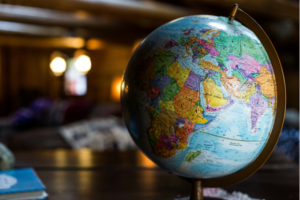
“The study of geography is about more than just memorizing places on a map. It’s about understanding the complexity of our world.” — Barack Obama
What Geography Looks Like at St Charles
At St Charles Catholic Primary School, geography is engaging, enquiry-based and connected to the real world. Our pupils:
- Develop curiosity about the world and the people who live in it
- Explore local, national and global environments
- Learn how human and physical processes shape the Earth
- Use maps, atlases and digital technology to investigate places
- Take part in fieldwork and practical geographical enquiries
- Develop respect for the environment and understand their responsibility to care for our planet
Through meaningful learning experiences, pupils develop a deeper understanding of the world and their role within it.
Intent
At St Charles Catholic Primary School, we strive to develop pupils’ curiosity and fascination about the world and their place within it. Our Geography curriculum enables children to understand the diversity of places, people and environments while developing secure knowledge of the Earth’s key physical and human processes.
Geography is carefully sequenced from Nursery to Year 6 so that learning builds progressively over time. Lessons form part of a coherent journey, enabling pupils to connect new knowledge to prior learning and develop secure understanding. Pupils gain both substantive knowledge (such as climate zones, rivers, trade, settlement and sustainability) and disciplinary knowledge, learning to think, question and reason like geographers.
Through the study of local, national and global places, pupils develop an understanding of interdependence, environmental responsibility and the impact of human activity on the natural world. Rooted in our Catholic ethos, pupils are encouraged to recognise their responsibility to care for the environment and respect the diverse communities that make up our world.
Fieldwork and first-hand experiences are integral to our curriculum and allow pupils to apply their knowledge in meaningful, real-life contexts.
Implementation
Geography is taught through planned units across the academic year, ensuring clear progression in:
- Locational knowledge
- Place knowledge
- Human and physical geography
- Geographical skills and fieldwork
Early Years and Key Stage 1
In Early Years, children explore their immediate environment, seasons and local surroundings, developing early geographical vocabulary and observational skills.
In Key Stage 1, pupils identify continents and oceans, study their local area and begin to use simple maps and directional language. They describe human and physical features and compare different environments, building strong foundational knowledge.
Key Stage 2
In Key Stage 2, pupils extend their locational knowledge and study a range of regions including Europe, North and South America. They deepen their understanding of physical processes such as rivers and extreme weather, and human processes such as settlement, trade and employment.
Pupils develop increasingly sophisticated geographical skills, including interpreting Ordnance Survey maps, using grid references and analysing geographical data. Learning is sequenced so that pupils move from describing places to explaining patterns and analysing connections between people and environments.
Prior learning is revisited regularly to support retention and ensure pupils build secure, connected knowledge over time.
Fieldwork
Fieldwork is embedded throughout the curriculum. Pupils conduct local studies, collect and present data, and apply classroom learning to real-world contexts. These opportunities help pupils understand how geography “happens” in their own community and how people interact with the environment around them.
Disciplinary Literacy
Literacy is central to Geography. Pupils are taught to read, write and speak as geographers. They engage with maps, atlases, photographs, diagrams, case studies and data, learning how to interpret and analyse information critically.
Subject-specific vocabulary is explicitly taught and revisited. Pupils use accurate geographical terminology when explaining processes, comparing regions and discussing environmental issues. Structured discussion and modelled explanations support pupils in articulating their thinking clearly and confidently.
Inclusion and Adaptive Teaching
At St Charles Catholic Primary School, we believe that geography should be accessible to all learners. Teachers use a range of adaptive teaching strategies to ensure that all pupils can engage successfully in geography lessons.
These strategies may include:
- Pre-teaching and revisiting key vocabulary
- Modelling geographical enquiry and map skills
- Use of visual supports such as maps, diagrams and photographs
- Scaffolded tasks to support pupils with additional needs
- Opportunities for collaborative learning and discussion
- Extension tasks to challenge and deepen understanding for pupils who are ready to progress further
Through adaptive teaching and high expectations, all pupils are supported to make strong progress in geography.
Impact
As a result of our Geography curriculum, pupils:
- Build secure and connected geographical knowledge
- Retain key vocabulary and concepts over time
- Use maps and atlases confidently
- Conduct geographical enquiries with increasing independence
- Explain the interaction between human and physical processes
- Understand their role within a global and sustainable world
By the end of Year 6, pupils leave St Charles Catholic Primary School with the knowledge, skills and curiosity needed to engage thoughtfully with the world around them.
How You Can Help at Home
You can support your child’s geographical learning in many simple and meaningful ways:
- Look at maps together — use atlases, Google Maps or holiday brochures to locate countries, continents and oceans.
- Talk about the weather and seasons and how they change throughout the year.
- Discuss places you visit and compare them to your local area.
- Encourage your child to notice human and physical features such as rivers, hills, roads and buildings.
- Watch or read about different countries and cultures to develop global awareness.
- Talk about news events in an age-appropriate way, particularly those related to the environment or climate.
Encouraging curiosity about the world around them helps children develop confidence, awareness and a sense of responsibility as global citizens.